
From October 20 to November 10, the Cultural Heritage Agency (Rijksdienst voor het Cultureel Erfgoed, RCE) and the Museo Arqueológico Nacional Aruba (MANA) organised a maritime heritage management training programme on Aruba. Sixteen participants from the Caribbean part of the Kingdom successfully completed the programme. The RCE looks back on a highly successful training in which participants gained both theoretical and practical knowledge and were able to apply newly learned skills directly during training dives at the SS Pedernales. This training is regarded as an important step towards building a sustainable network for maritime heritage management in the Caribbean and strengthening professional capacity in this field.
Laying the foundation
Week 1 - On 20 October, the training was officially opened at MANA in the presence of Mrs Gerlien Croes, Minister of Education in Aruba. Following the opening and press moment, the group, after getting acquainted with one another, immediately began the first theory sessions (photo 1). RCE colleagues Martijn Manders and Robert de Hoop delivered these lectures, and MANA provided a well-equipped auditorium at their museum for the theoretical part of the programme.
The theoretical component included introductory courses in maritime archaeology and maritime heritage, as well as more specialised topics such as GIS and 3D photogrammetry. A key element was active discussion: thanks to the participants’ diverse professional backgrounds, current heritage issues across the islands were explored from different perspectives, leading to insightful conversations.
Some topics were practised directly in the field. An example can be seen in photo 2, where participants practised measurement techniques, as well as search methods such as circular and line searches. A group photo was taken of all participants wearing the team shirt designed specifically for this training (photo 3).
During week 1, the assignments for the programme were explained: a desk-based assessment, a management plan and two posters. After an intensive week of theory, Sunday was reserved for a relaxing excursion guided by Aruban participant Harold Kelly (photo 4), during which several archaeological sites on the island were visited.
[Article continues under the photos]


Time to Put Theory into Practice
Week 2 - After completing the final theory lessons, the programme shifted to practical work in the field. Participants were introduced to the two diving schools that would support the dives at the SS Pedernales (a British oil tanker). The group was divided into a morning and an afternoon team, and each prepared a daily dive plan outlining tasks for the day. In this way, the teams collaborated to collect the information and data required for their management plan and for creating a 3D model of the site.
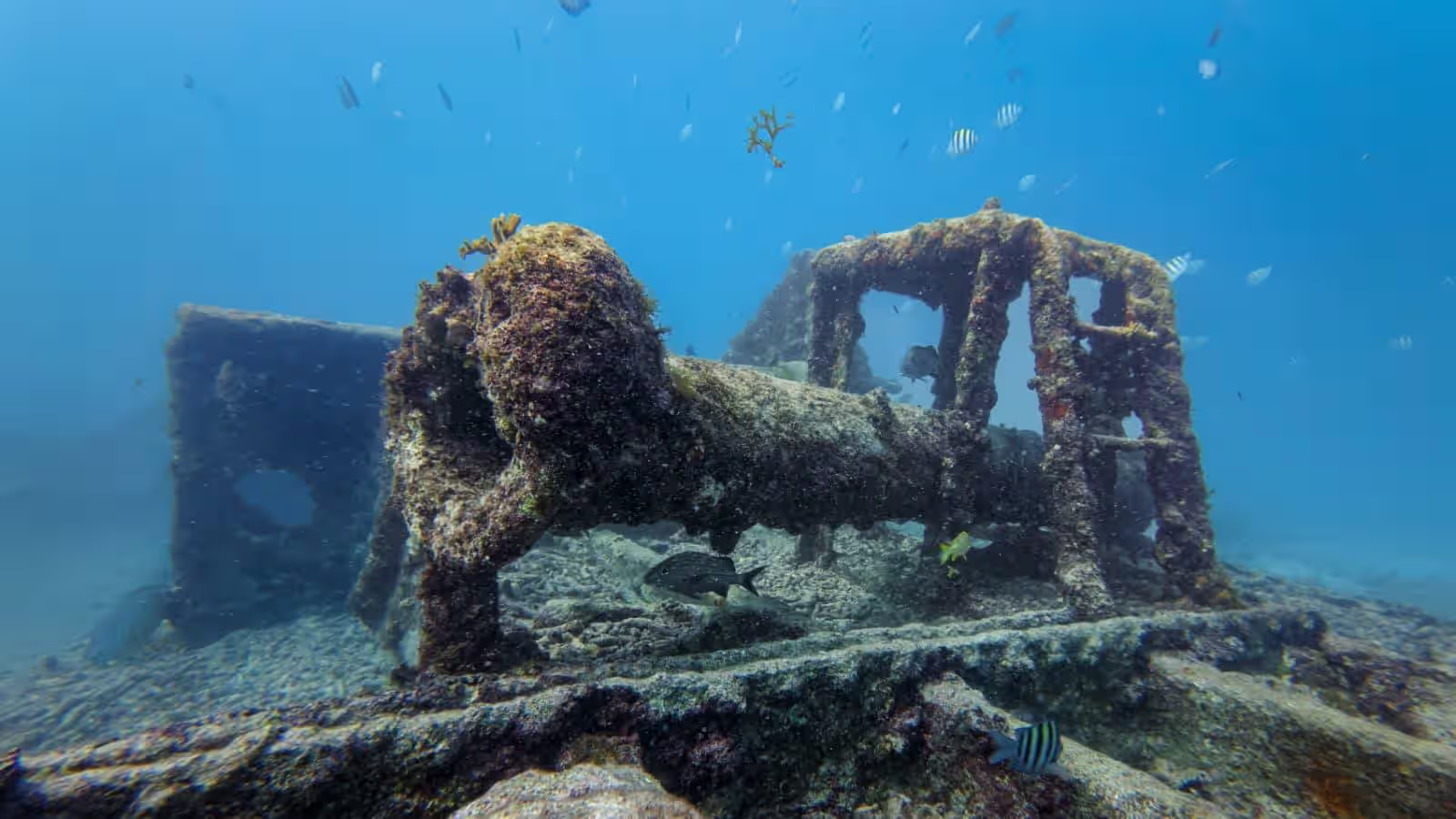
Once everyone was settled on the boat (photo 5), the short five‑minute trip to the wreck site began. Underwater, the teams worked intensively: measuring, sketching and photographing. This resulted in valuable data as well as wonderful underwater photos of the participants and the wreck (photos 6 and 7).
During this week, several interviews were arranged with local media. Martijn Manders participated in two radio interviews and one television interview, together with one or more participants. The media interest was encouraging and helped raise awareness of maritime heritage management on the island.
On Sunday, another excursion took place, this time to San Nicolas and Alto Vista, organised by participant Raymundo Dijkhoff (photo 8).
[Article continues under the photos]
Image: © RCE
Group photo during the excursion
Everything Comes Together
Week 3 - By the third week, participants had collected their own data during the dives. The focus now shifted to processing this data and completing their assignments: the desk-based assessment, the management plan and the two posters. One poster focused on the history of the site; the other explored the site’s potential value for Aruban society.
Towards the end of the week, the presentations of the management plans and posters took place (photo 9), followed by constructive and insightful discussions. A joint evaluation session was held, during which both participants and trainers shared positive feedback, while also identifying useful points for improvement.
The final highlight of the training was the closing ceremony at Fort Zoutman, known locally as Forti, a former Dutch fort now functioning as a museum. MANA organised a festive evening in the courtyard, during which certificates were presented by the Minister of Tourism, Mr Wendrick Cicilia, together with Martijn Manders. After the ceremony, a group photo was taken (photo 10), followed by food, drinks and a celebratory gathering.
On Sunday, the final day of the programme, participants enjoyed an adventurous excursion to Arikok National Park. Travelling by jeep, the group explored the park’s caves and dramatic coastlines before ending the day—and the entire training—with a final shared dinner.
[Article continues under the photos]
Image: © MANA
The two posters created by the participants
Image: © MANA
Group photo with certificates and Minister Wendrick Cicilia (centre)
To be continued
This training represents a significant step in building professional capacity for maritime heritage management on the islands and strengthening a sustainable network in this field. Together with the participants, the aim is to initiate new projects and continue advancing maritime heritage management throughout the Caribbean part of the Kingdom. Thanks to the enthusiasm of the participants and the strong support of our partner MANA, the first steps have already been taken. We look back on a very successful programme.